




A pro-grade wood bat is built to perform. It's not built to be invincible. We ship 500 to 1,000 wood bats a week out of Connecticut, and we hear the same question every season: "How do I make it last?" Most breaks are preventable. Here are the habits that matter most, scored from 0 to 10 by how much they help your bat last, and the full routine we tell every customer.
Wood bat care habits, ranked
| Score | Habit | Why |
|---|---|---|
| 10/10 | Foam balls off the machine | Off-season reps without risking your bat |
| 7/10 | Hitting with the edge grain | The edge grain is the strongest hitting surface |
| 5/10 | A BP bat and a game bat | The BP bat takes the beating, the gamer stays ready |
| 0/10 | Leaving your bat in the trunk | Heat dries it out, cold makes it brittle |
10/10: Use foam balls off the machine
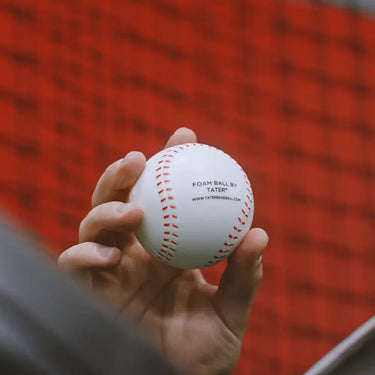
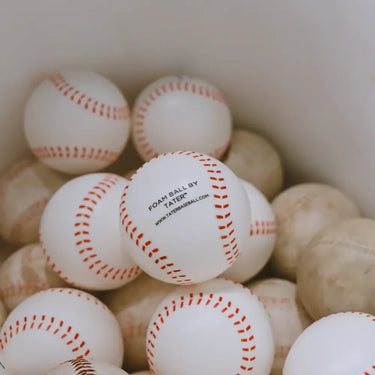
The best thing you can do for your bat in the off-season is hit off the machine. Ours are 5 oz, the weight of a real game ball, so the flight looks like a real at-bat and you don't have to worry about breaking your bat. A whole off-season of machine reps with game balls can go through several bats.
Skip the cage's rubber balls too. Most cages use rubber-coated balls (5.5 to 6 oz, harder than leather), and hitting them with a wood bat puts more stress on it than real leather does. More on why the weight matters in our .
7/10: Hit with the edge grain
The edge grain is the strongest hitting surface on a wood bat, so you want it on the ball every time.
What the edge grain is: the grain in a wood bat runs the length of the barrel, and it looks different depending on which side you look at. Turn the barrel slowly and you'll see two patterns:
- Edge grain: tight, straight lines running up the barrel, close together and evenly spaced. You're looking at the edges of the wood's growth rings, which is why this side is the strongest.
- Face grain: wider, wavy patterns that look like ovals or flames. This side is weaker to hit on.
How to check you're using it: you don't have to read the grain before every swing. The logo goes on the face grain, so keep the logo facing up and the edge grain meets the ball.
Get it wrong once and it's not the end of the world. The ball just won't travel as far, and hitting off the edge grain over and over wears a bat out sooner.
5/10: Keep a BP bat and a game bat
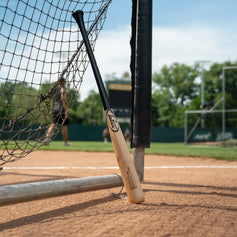
{{image photo-2.jpg "A gamer stays clean when a BP bat takes the daily reps" "Two-tone Tater maple wood bat leaning against a batting cage net on a baseball field"}}
Not a necessity, but it helps. A BP bat takes all the lumps and bruises: machine work, overhand BP, every day. Make it your beater. Your game bat stays clean and ready, and if the BP bat breaks, you still have your gamer.
0/10: Never leave it in the trunk
The last thing you want to do. Wood takes on and loses moisture, and it swells and shrinks with temperature.
- Hot car: your bat gets even hotter than the air, dries out and can develop small stress cracks.
- Cold car: the wood gets stiff and brittle, loses its flex and breaks on inside pitches.
- Damp basement: the wood soaks up moisture and the barrel feels soft on contact.
Store wood bats indoors at 60 to 75°F and 40 to 60% humidity. More on cold, heat and humidity in our guide.
Two more habits worth keeping
Wipe it down after every game. Dirt, sweat and pine tar work into the finish over time. Wipe it cap to knob with a damp cloth (no soap), dry it, and check for hairline cracks, especially near the cap. Spot-clean pine tar with mineral spirits. Never use acetone or paint thinner; they lift the finish.
Use a bat sleeve in your bag. A lot of bat damage happens off the field: wood against cleats, helmets and loose balls in the bag. A microfiber sleeve solves it.
Care by wood
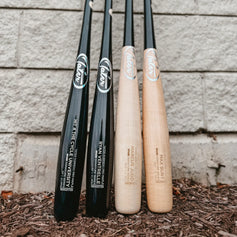
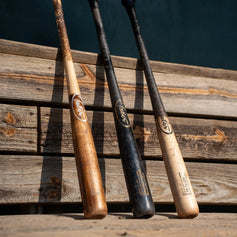
- Maple: the hardest wood and the most sensitive to temperature, so the no-trunk rule matters most. Always hit it with the logo facing up.
- Birch: more forgiving. It tends to split before it breaks, so a hairline crack is your warning.
- Ash: the most likely to flake. Keep the logo facing up just like maple; hit off the edge grain and an ash bat flakes and breaks sooner. Watch for the grain starting to separate. We don't make ash bats; like a lot of bat makers, we've moved away from ash to maple and birch. If you still swing an ash bat, the same care rules apply.
Comparing woods? See our .
When to retire a bat
- A crack longer than 2 inches in any direction
- A cracked or chipped end cap, with bare wood showing
- Several ring-like splits running up the bat
- A soft, hollow sound on contact
- On an ash bat, heavy flaking past the finish
The short version
Hit foam off the machine, hit with the edge grain (logo up), give your gamer a backup, and never leave it in the car. Wipe it down, sleeve it, and catch hairline cracks early. Most Tater customers get a full season out of one custom bat. Build yours in the .




Pelota de espuma Tater® de Tater Baseball® | Pelotas para máquina de lanzar
$ 74.99
A partir de $ 59.99
/


