



Every Tater custom wood bat is hand-built in our shop in Cheshire, Connecticut, where we make 500 to 1,000 bats a week. A bat takes about 45 minutes of hands-on work, spread across several stations, to go from a raw billet to a finished game bat. Every one goes through the same steps, whether it's a stock 271 or a custom torpedo for a pro hitter. Here's how it happens.
The steps at a glance
| Step | What happens |
|---|---|
| 1. The billet | Maple or birch, hand-split along the grain |
| 2. Inspection | Every billet checked by hand; 5 to 10% don't make the cut |
| 3. Turning | Cut on a CNC lathe to your turn model's exact profile |
| 4. Cupping | The end of the barrel cupped to hit your exact weight |
| 5. Sanding | Hand-sanded through four grits |
| 6. The ink dot | A grain test on the bare wood of every bat |
| 7. Finishing | Conditioner, color, clear coats and a bone-rub |
| 8. Engraving | Laser engraved with your name or anything you want |
| 9. Final QA | Weight, length and feel checked before it ships |
1. The billet
A billet is the raw cylinder of wood that becomes a bat. Ours start at about 37 inches long and 2.75 inches across, and weigh around 90 ounces. Every Tater bat is maple or birch, and our billets are hand-split, so the wood breaks along its natural grain instead of being sawed across it. Splitting with the grain keeps it straight from the start, and straight grain makes a stronger bat.
We get new shipments of wood every couple of weeks, so every bat is made from fresh wood, and leftover billets from an old shipment get scrapped. Until it's turned, the wood sits in a moisture-controlled room so it stays dry and ready. More on the two woods in maple vs birch.
2. Inspection and grading
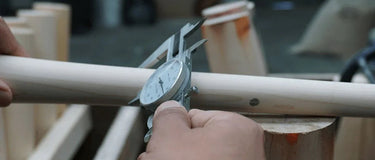
Every billet that comes in gets inspected by hand, and we check three things: the wood itself, the slope of the grain and the density and weight against the spec it's going to be built to. A knot, a blemish or grain that runs off at an angle means it's firewood. We reject about 5 to 10% of incoming billets for cosmetic or structural issues. It's better to lose a billet than ship a bat that isn't right.
3. Turning on the lathe
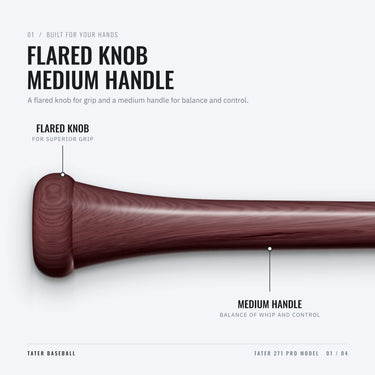
This is the step that makes a billet a bat. We turn every bat on a CNC lathe programmed with the exact profile of each turn model: the 271, the 243, the torpedo, our X-series and the rest. Each profile sets the handle thickness, barrel size, taper and knob that make an X4 feel different from a 243.
We use CNC instead of turning by hand for one reason: consistency. A pro hitter who orders six bats of the same spec wants all six to feel the same, and so do you. Not sure which model to pick? See how to choose a wood bat.
4. Cupping
The cup is the small bowl drilled into the end of the barrel. It takes a little wood off the end, which moves the balance point toward your hands and gets the bat to its exact weight: on one 32-inch bat, cupping took it from 29.5 ounces to 29, exactly a drop 3. Because the cup takes weight off the end, we can start from a denser, stronger billet. Our standard cup is about 7/16 of an inch unless you ask for something different. More in cupped or uncupped bats.
5. Sanding
After the lathe, every bat is hand-sanded through progressively finer grits: 120, 220, 320 and 400. That's what gives the bat its smooth surface and gets it ready for the finish.
6. The ink dot
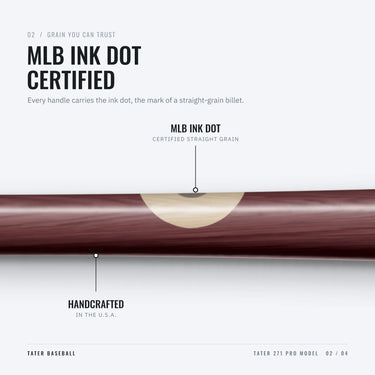
Every bat we make gets an ink dot, maple and birch. A drop of ink goes on the bare wood of the handle and runs along the grain, showing how straight it is: a tight bleed means a safe, shallow slope, and a fast bleed means a steep one. The grain has to run within 3 degrees of straight to pass. If it doesn't, the bat doesn't leave the shop. On a finished bat, you'll see the dot as a small dark spot under the clear coat. More in what is the ink dot on a wood bat.
7. Finishing
The finish goes on in stages:
- Wood conditioner to prep the wood.
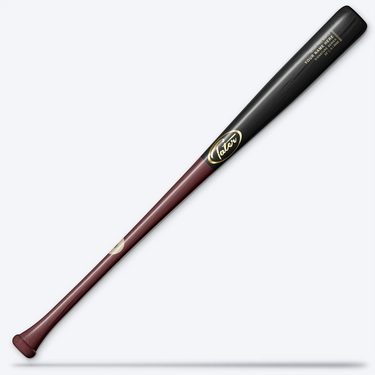
- Color: a clear finish, a stain or paint, from a natural handle and black barrel to full custom artwork painted by our artists.
- Two to three coats of high-build polyurethane to seal and protect it.
- A final bone-rub for the hard, smooth pro feel of a Tater bat.
Between coats, the bats hang on the rack to dry.
8. Engraving
Custom bats are laser engraved, so the engraving sits beneath the finish coat and won't wear off. You get up to four lines of text: your name, a nickname, a number or anything else you want on the barrel. When a program orders a full set, like the 36 bats we made for Sluggers Academy, every player can have their own name on their bat.
9. Final QA
Before a bat ships, we check it one last time:
- Weight within half an ounce of spec
- Length within 1/16 of an inch
- A visual inspection and a hand-feel check
- A photo for your order record
If anything is out of spec, it goes back to the floor.
How long it takes
- Custom bats take about 10 to 14 business days, or 1 to 2 weeks with a rush build.
- Stock bats are already built and ship from Cheshire in 2 to 3 business days. Browse our stock wood bats.
Why it matters for what you swing
Every step is a decision that changes how your bat performs. The bat that shows up at your door goes through the same wood, the same process and the same checks whether you're a big leaguer or a 14-year-old high school hitter. Ready to build yours? Start in the custom wood bat builder, and make it last with our wood bat care guide.
FAQ
How long does it take to make a wood bat?
About 45 minutes of hands-on work, spread across several stations. From order to ship, a custom Tater bat takes about 10 to 14 business days, or 1 to 2 weeks with a rush build. Stock bats ship in 2 to 3 business days.
Does every Tater bat have an ink dot?
Yes. We ink dot every bat we make, maple and birch, and the grain has to run within 3 degrees of straight to pass.
Are Tater bats turned by hand or on a CNC lathe?
We turn every bat on a CNC lathe so bats of the same spec feel the same. Inspection, sanding, finishing, engraving and the final bone-rub are all done by hand.
Where are Tater bats made?
Every Tater bat is hand-built in our shop in Cheshire, Connecticut.
Key takeaways
- Every Tater bat starts as a hand-split maple or birch billet, and every billet is inspected by hand; 5 to 10% don't make the cut.
- Each bat is turned on a CNC lathe, cupped, hand-sanded, ink dotted, finished, engraved and checked to within half an ounce and 1/16 of an inch.
- We make 500 to 1,000 bats a week in Cheshire, Connecticut; custom bats take about 10 to 14 business days.
Best seller

Best seller


+3
Best seller